
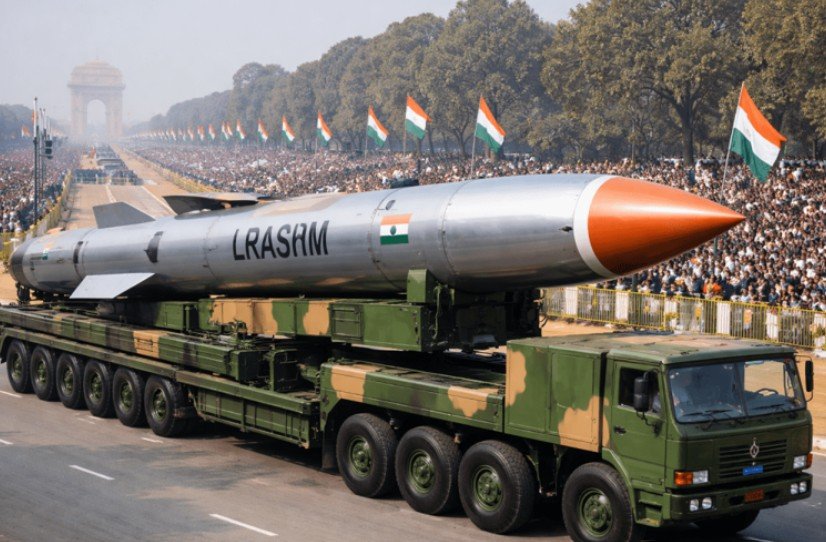
India has successfully conducted the second flight test of its Long-Range Hypersonic Anti-Ship Missile (LR-AShM), developed by the Defence Research and Development Organisation. The test was carried out off the Odisha coast and marks a major milestone in strengthening India’s maritime defence capabilities and deep-sea strategic reach.
Key Features:
Range and Speed:
- Strike range exceeds 1,500 km
- Maximum speed up to Mach 10
- Sustains around Mach 5 during glide phase
- Extremely high speed helps in evading modern radar and interception systems
The missile is based on a two-stage hypersonic glide vehicle (HGV) design, which significantly enhances its overall performance. In the first stage, a solid rocket booster propels the missile to the required altitude and hypersonic speed. After this phase, the second stage a highly manoeuvrable hypersonic glide vehicle separates and glides towards the target at extreme speeds. This design allows the missile to combine high velocity with advanced manoeuvrability, making it more effective in evading interception and accurately striking targets.
Targeting and Strike Capability: The missile is capable of striking both stationary and moving naval targets with high precision, making it highly versatile in combat scenarios. It is particularly effective against high-value assets such as aircraft carriers, enhancing its role as a strategic deterrent. The system is equipped with advanced indigenous sensors that enable accurate target identification and precision guidance during the terminal phase. Additionally, its ability to support multiple payload configurations increases operational flexibility, allowing it to adapt to different mission requirements
Evasion and Survivability:
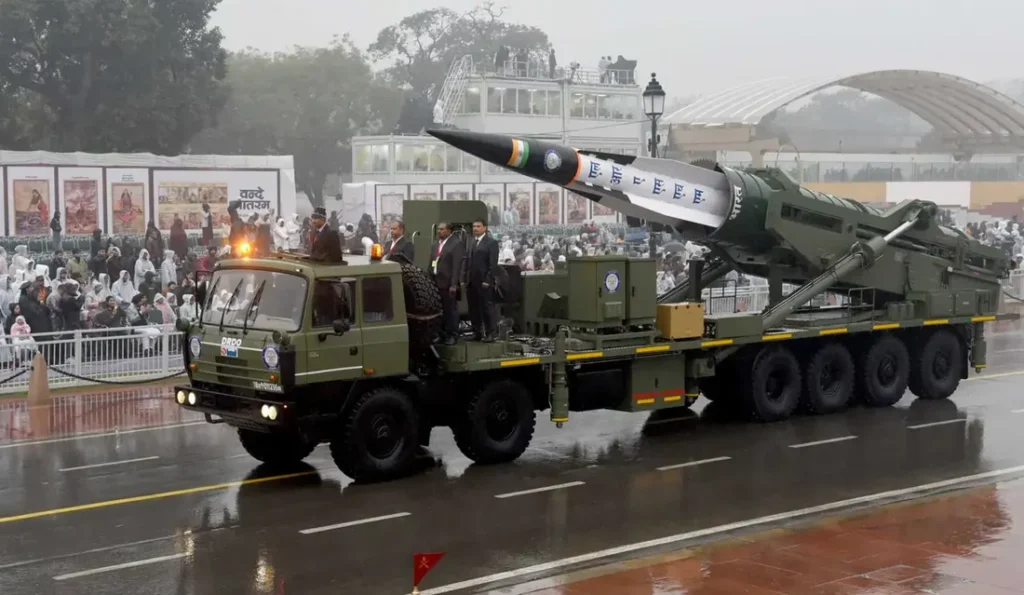
The missile is designed with advanced evasion capabilities that significantly enhance its survivability against enemy defence systems. It follows unpredictable flight paths, making it difficult for adversaries to track its trajectory. Additionally, it can execute low-altitude and skipping trajectories, further reducing the chances of detection. Its high manoeuvrability allows it to change direction rapidly during flight, making interception extremely challenging. Overall, it is specifically engineered to bypass modern air defence and missile shield systems, ensuring a higher probability of successfully reaching its target.
Strategic Significance:
The development of this missile significantly strengthens India’s maritime deterrence capability by enhancing its ability to project power over long distances. It boosts the country’s “carrier-killer” potential, enabling effective targeting of high-value naval assets such as aircraft carriers. Additionally, it extends India’s defensive perimeter into deep ocean regions, improving its capacity to secure sea lanes and strategic interests. Overall, the missile serves as a strong deterrent against adversaries such as China and Pakistan, reinforcing India’s position in regional maritime security.
Development and Indigenous Capability:
The missile has been developed by laboratories of the Defence Research and Development Organisation under the Dr APJ Abdul Kalam Missile Complex, with active support from Indian industry partners. This achievement reflects India’s growing strength in indigenous defence technology and highlights the country’s commitment to self-reliance under the Atmanirbhar Bharat initiative. The successful test of the LR-AShM highlights India’s rapid advancement in hypersonic weapon technology. It significantly boosts naval strike capability, strengthens strategic deterrence, and reinforces India’s position as a technologically capable defence power.