
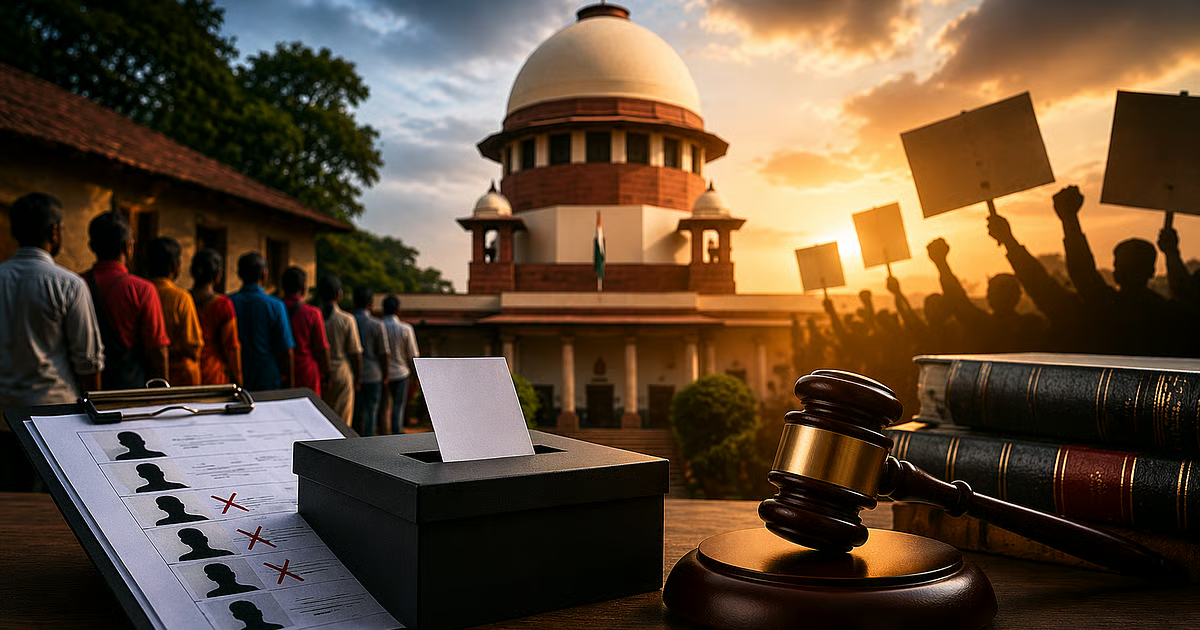
Supreme Court dismisses plea on alleged bias in appointment of Central staff for election counting.
WHAT’S THE NEWS?
• Supreme Court rejected Trinamool Congress plea alleging bias by Central government staff in election counting.
• Court held no evidence of unfairness and questioned demand for proportional representation.
KEY POINTS
• EC appoints Central staff for neutrality in elections.
• Court termed allegations as ‘misconceived’.
• Emphasized independence of Election Commission.
• Highlighted lack of proof for bias claims.
HOW IT WORKS
• Election Commission appoints officials for polling & counting.
• Central staff are deployed to ensure neutrality.
• Randomization process used for assigning staff.
• Observers monitor fairness of election process.
EXAMPLES
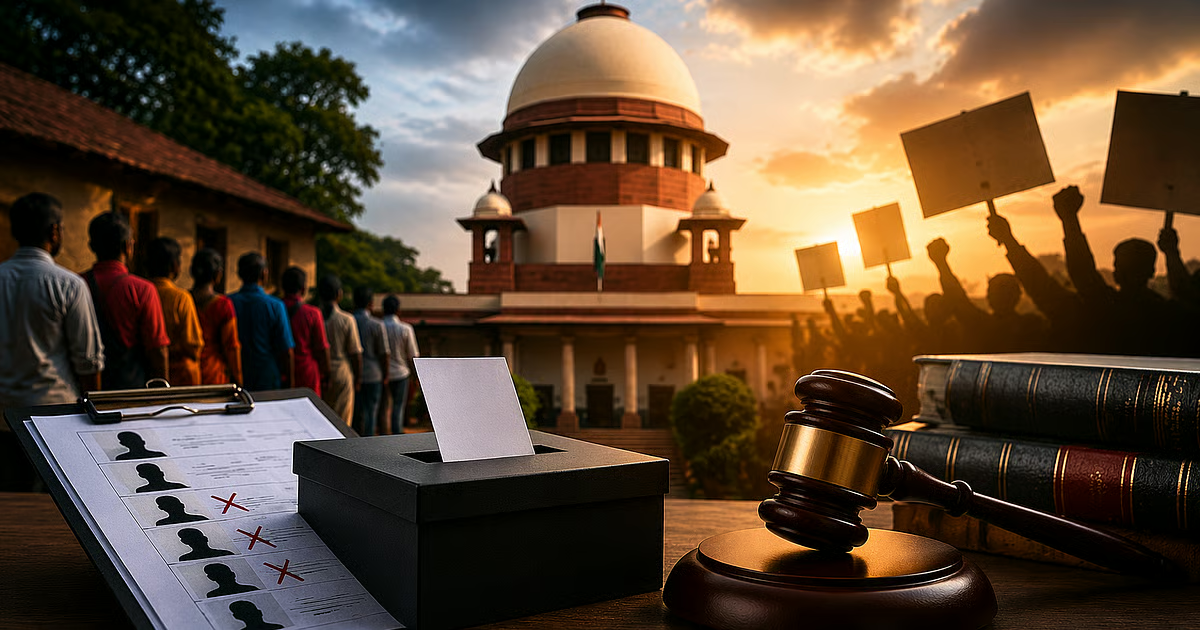
• Deployment of Central Armed Police Forces in sensitive areas.
• Random allotment of counting officials across districts.
WHY IT MATTERS
• Ensures free & fair elections (basic feature of Constitution).
• Strengthens trust in democratic institutions.
• Prevents political interference in election process.
THE BIG QUESTION
• Should there be proportional representation of State vs Central staff in election duties, or should neutrality be the only criteria?
SUMMARY
• Supreme Court upheld the autonomy of Election Commission.
• Reinforced principle of neutrality in electoral processes.
• Dismissed claims lacking evidence.
UPSC FOCUS
Prelims: Election Commission, Article 324, Free & Fair Elections.
Mains: GS2 – Role of EC, electoral reforms, institutional independence.