
South Korea successfully launched its domestically developed Earth-observation satellite, Compact Advanced Satellite 500-2 (CAS500-2), on 3 May 2026. The satellite is also known as Next-Generation Medium Satellite No. 2 (Cha Middle 2). It was launched aboard a SpaceX Falcon 9 rocket from Vandenberg Space Force Base.
The mission was overseen by the Korea AeroSpace Administration (KASA). Originally, the satellite was planned to be launched using a Russian Soyuz rocket, but the plan was changed due to disruptions following the Russia-Ukraine War, resulting in a delay of nearly four years. Approximately one hour after launch, CAS500-2 successfully separated from the Falcon 9 rocket and entered a sun-synchronous orbit at an altitude of 498 km. Within 15 minutes of separation, the satellite established its first communication with a ground station in Svalbard, confirming that it was operating normally.
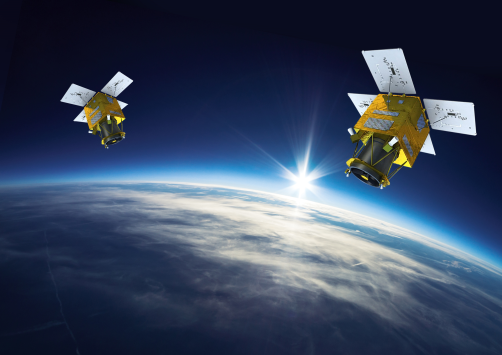
The satellite was developed and manufactured under the leadership of Korea Aerospace Industries (KAI). It represents the first mid-sized Earth-observation satellite of its kind in South Korea built under private industry leadership.
The CAS500-2 satellite has a mass of 534 kg and is equipped with advanced imaging capabilities. It can capture high-resolution panchromatic (black-and-white) images at 0.5-metre resolution, allowing for very detailed observation, as well as colour images at 2.0-metre resolution, which are useful for broader visual analysis and mapping purposes.
CAS500-2 demonstrates a strong level of domestic technological capability, with 86% of its satellite platform developed within the country and 98% of its payload technology produced domestically, highlighting significant progress in indigenous space technology and self-reliance.
The primary mission of CAS500-2 is to provide high-precision imagery for land and resource management, support disaster monitoring and response efforts, and contribute to national spatial information services, helping improve planning, decision-making, and emergency management. The successful launch of CAS500-2 highlights South Korea’s growing capabilities in space technology, particularly in indigenous satellite development and private sector participation, while strengthening its capacity in Earth observation and national data infrastructure.