
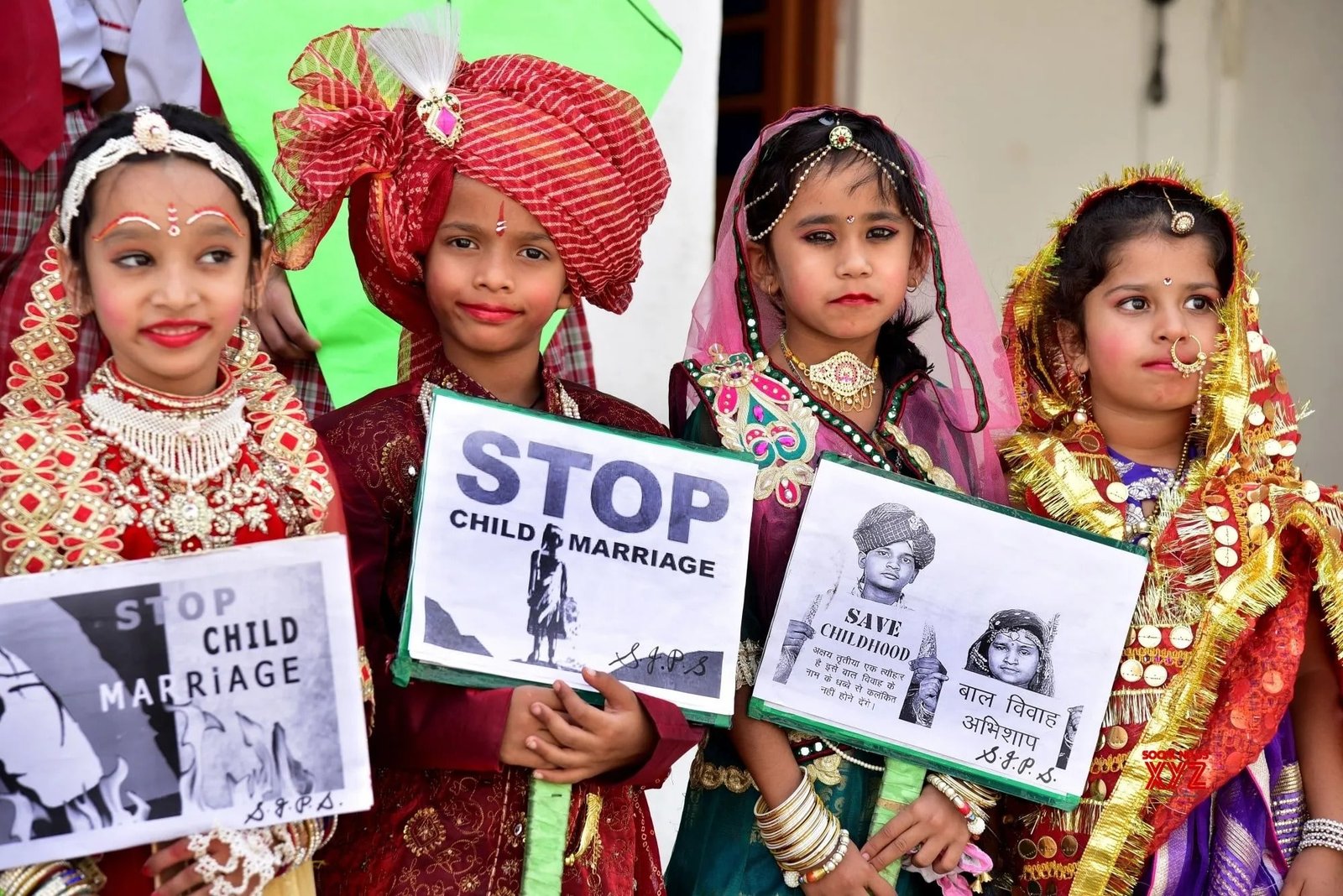
Based on NFHS-5 and National Family Health Survey-6 (2023-24) trends highlighted in the image.
Why in News?
Recent survey findings show that child marriage has declined in India, but nearly one in five women aged 20–24 years were married before the legal age of 18 years. Significant interstate variations continue to exist.
Background
Child marriage refers to marriage where either party is below the legally prescribed age. In India, the minimum legal age is 18 years for women and 21 years for men. It remains linked with poverty, gender inequality, low educational attainment, and poor health outcomes.
Key Facts for UPSC Prelims
• Child Marriage Prohibition Act, 2006 prohibits child marriages.
• Sustainable Development Goal (SDG) Target 5.3 aims to eliminate child marriage.
• NFHS data is the primary source for monitoring child marriage trends.
• Highest prevalence reported in states such as Bihar and West Bengal.
• Lowest prevalence reported in Kerala and some northeastern states.
Important Data from the Image
• India: Around 19% of women aged 20–24 were married before 18.
• Decline from about 23% to 20% over the last four years.
• Bihar and West Bengal recorded among the highest levels (~35%).
• Kerala reported among the lowest levels (~3%).
• Rural areas continue to record higher prevalence than urban areas.
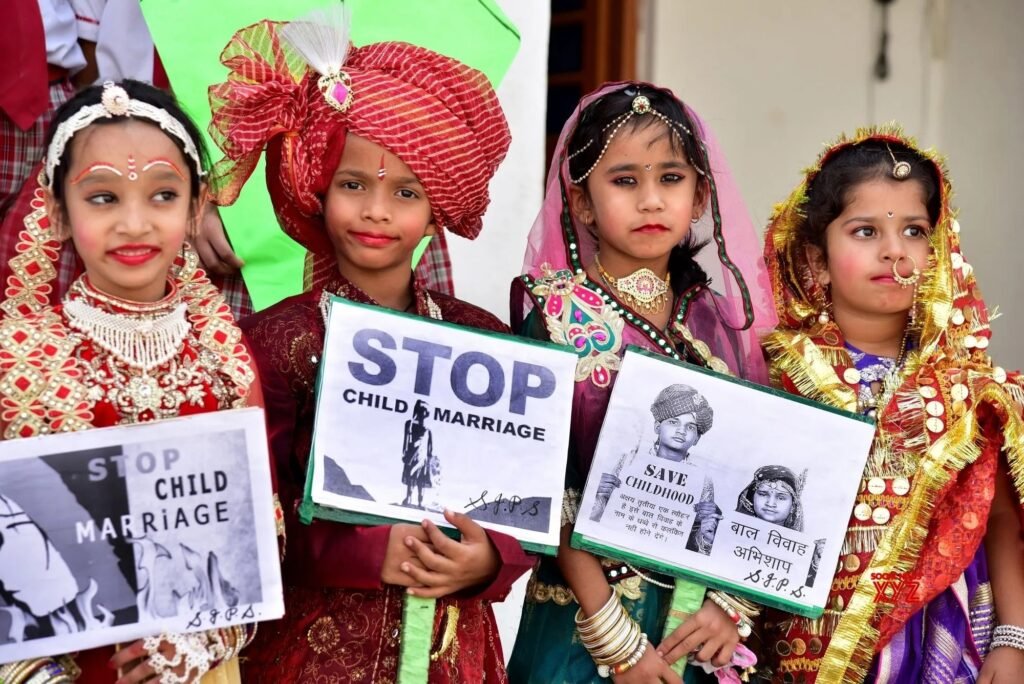
Causes of Child Marriage
• Poverty and economic insecurity
• Gender discrimination and patriarchal norms
• Lack of access to education
• Social customs and traditional practices
• Concerns regarding safety and security of girls
Impacts of Child Marriage
• Higher maternal and infant mortality risks
• Increased school dropouts among girls
• Early and high fertility rates
• Poor nutritional outcomes
• Reduced workforce participation and economic empowerment
Government Initiatives
• Prohibition of Child Marriage Act, 2006
• Beti Bachao Beti Padhao (BBBP)
• Sukanya Samriddhi Yojana
• Mission Shakti
• POSHAN Abhiyaan
• Samagra Shiksha
Current Affairs Linkage
The continued decline in child marriage supports India’s progress toward SDG 5 (Gender Equality). However, high prevalence in specific states highlights the need for targeted interventions, education reforms, and women empowerment measures.
UPSC Mains Analysis
Despite progress, child marriage remains a multidimensional challenge. Addressing it requires a combination of legal enforcement, girls’ education, skill development, social awareness, and economic empowerment. State-specific strategies are necessary because regional disparities remain significant.
Way Forward
• Strengthen implementation of child marriage laws
• Improve secondary education access for girls
• Expand conditional cash transfer schemes
• Promote community awareness campaigns
• Enhance women’s economic opportunities
• Improve monitoring through digital governance systems
Conclusion
India has made notable progress in reducing child marriage, but the persistence of regional disparities indicates that legal measures must be complemented by social and economic reforms to achieve complete eradication.