
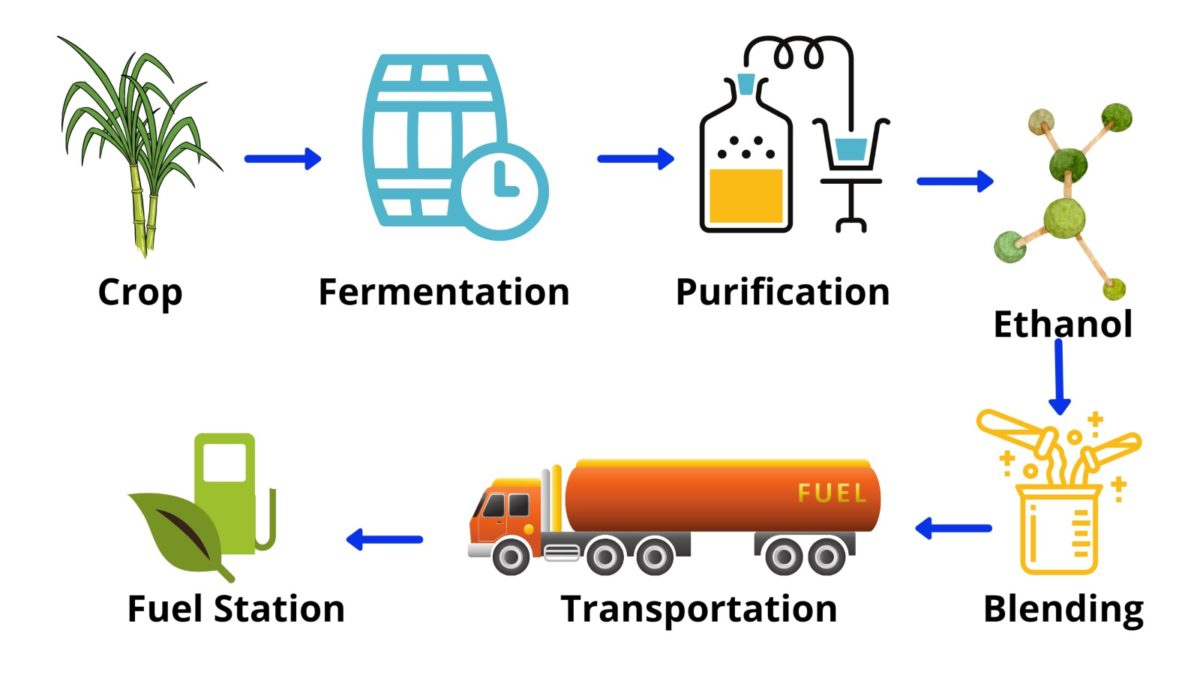
Subheading: India accelerates ethanol blending to boost energy security, reduce imports, and support farmers.
WHAT’S THE NEWS?
India is pushing ethanol blending in petrol (target: 20% by 2025). The move aims to cut crude oil imports, reduce emissions, and increase farmer income. However, concerns over food security and water use have emerged.
KEY POINTS
• Target: 20% ethanol blending by 2025 (E20)
• Reduces crude oil import dependency
• Supports sugarcane and maize farmers
• Linked to climate goals (lower emissions)
• Raises “Food vs Fuel” concerns • Water-intensive agriculture impact
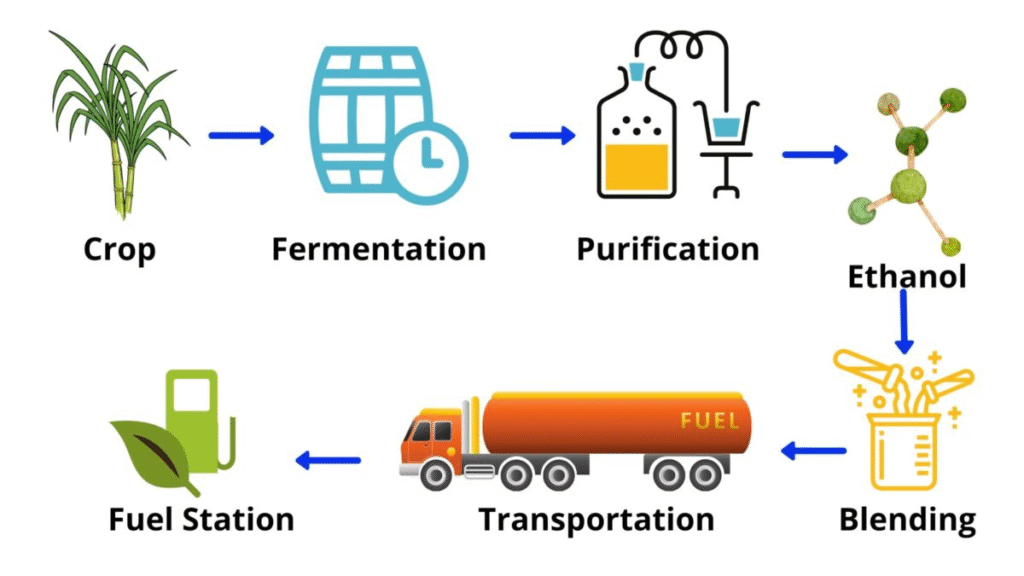
HOW IT WORKS
Sugarcane / Maize → Ethanol Production (Distillation) → Blending with Petrol → Used as Transport Fuel → Reduced Emissions & Imports
EXAMPLES
• Brazil: Successfully uses high ethanol blending (flex-fuel vehicles)
• India: UP, Maharashtra leading ethanol producers
WHY IT MATTERS
• Energy Security: Reduces import bill (~85% crude import dependent)
• Environment: Cleaner burning fuel, lower CO₂ emissions
• Economy: Boosts farmer income and rural economy
• Global Commitments: Helps meet climate targets (Paris Agreement)
THE BIG QUESTION
Can India balance ethanol production without compromising food security and water sustainability?
SUMMARY
Ethanol blending is a strategic step toward sustainable energy. However, careful policy design is needed to balance energy goals with food security and environmental sustainability.
UPSC FOCUS
Prelims:
• Ethanol = Biofuel
• E20 target by 2025
• NITI Aayog roadmap
• Crops: Sugarcane, maize
Mains (GS3):
• Energy security
• Agriculture-economy linkage
• Environmental sustainability
• Food vs Fuel debate