
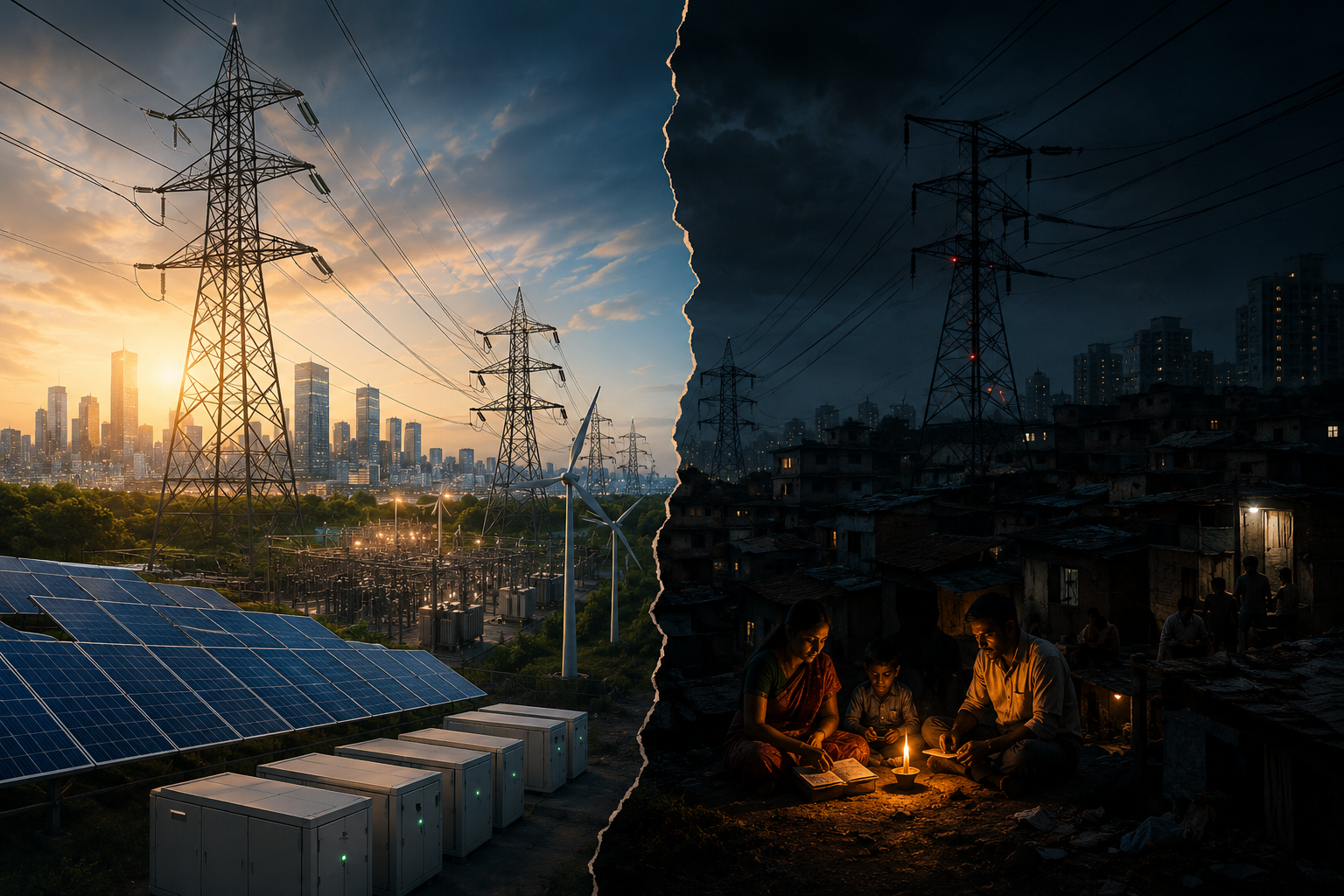
The Current Power Situation
- The Ministry of Power reported that electricity demand broke all previous records, with peak demand hitting nearly 271 GW.
- While the government presents this as proof of the grid’s strength, reports of power cuts continue across the country.
- Grid-India officially reported a peak power deficit of roughly 1.7 GW, resulting in load shedding and blackouts in several areas.
The Hidden Deficit
- Experts suggest the actual power deficit is much higher than reported.
- State load dispatch centers track power at a macro level, meaning local outages are often excluded from official figures.
Local distribution companies sometimes deliberately disconnect areas independently, keeping these disruptions entirely out of the public domain.
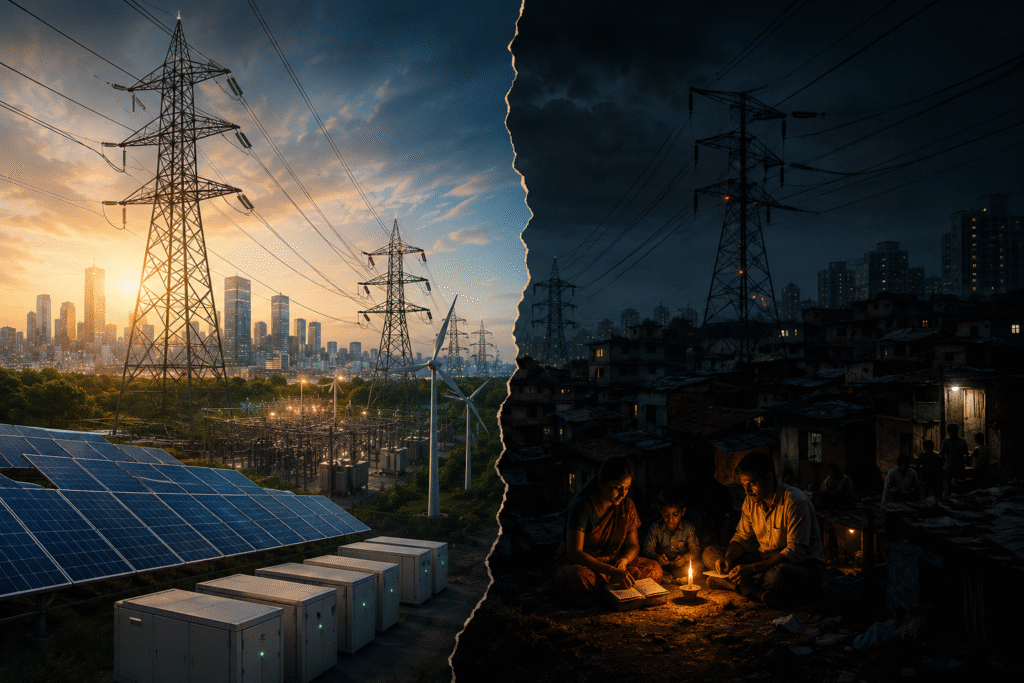
Why Are Power Cuts Still Happening?
- Weak Distribution Infrastructure: Infrastructure upgrades have failed to keep pace with rapidly rising demand. State-owned discoms often lack the financial health to boost this infrastructure.
- Transmission Bottlenecks: Although India operates as a single grid on paper, bottlenecks often prevent electricity from flowing smoothly from power-surplus areas to deficit areas.
- Renewable Energy Fluctuations: Sudden weather changes, like cloud cover, can abruptly drop solar power output, stressing grid stability.
- Evening Peak Demand: Peak demand often occurs in the evenings when solar energy generation has already stopped, placing immense pressure on thermal and hydro sources.
State-Wise Ground Reality
- Uttar Pradesh & Bengaluru: Both are experiencing significant and prolonged outages. In Bengaluru, authorities blame maintenance, weather faults, and transformer tripping, with cuts sometimes lasting 8 hours.
- Kerala: Imposed power cuts in April, but early summer rains in May have eased demand. The state generates only 30% of its power and relies heavily on evening purchases.
- Tamil Nadu: Managed its high April peak demand through short-term purchases. While official figures claim “zero load shedding,” authorities acknowledge that local supply disruptions are actively affecting parts of Chennai.