
Subheading:
Supreme Court refines legal framework on passive euthanasia, strengthening dignity under Article 21.
WHAT’S THE NEWS?
• The Supreme Court has updated guidelines on Passive Euthanasia.
• It simplified procedures for Living Wills (Advance Medical Directives).
• Builds on earlier judgments: Aruna Shanbaug (2011) and Common Cause (2018).
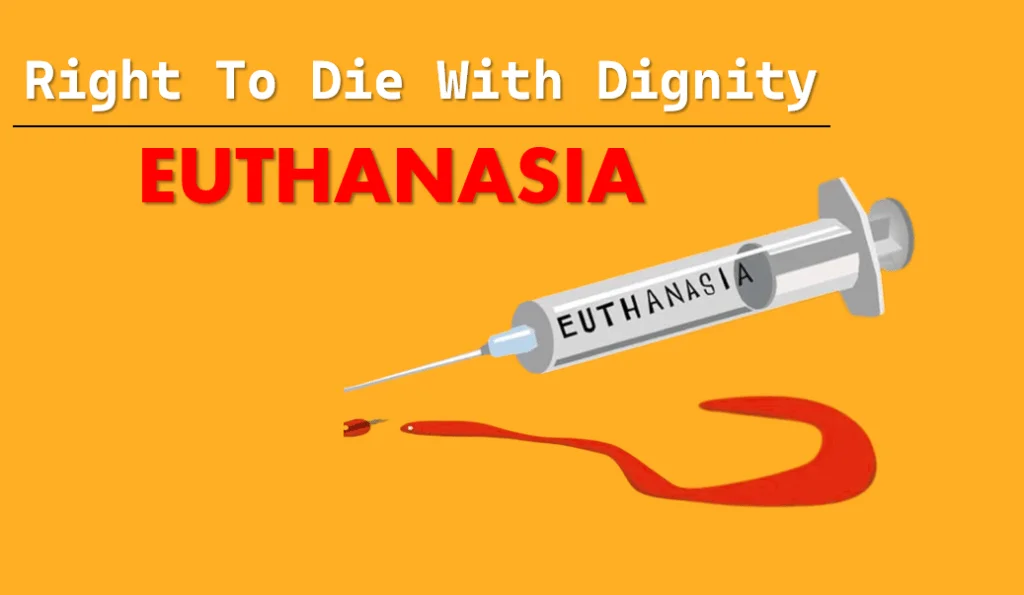
KEY POINTS
• Passive euthanasia = withdrawal/withholding life support.
• Recognized under Article 21 (Right to Life with Dignity).
• Living Will allows patients to decide future treatment.
• Magistrate attestation requirement relaxed.
• Medical boards ensure safeguards.
• Active euthanasia remains illegal in India.
HOW IT WORKS
1. Individual creates a Living Will (Advance Directive).
2. Specifies conditions (terminal illness, coma, etc.).
3. Hospital forms:
– Primary Medical Board
– Secondary Review Board
4. Decision verified and consent ensured.
5. Withdrawal of life support executed legally.
EXAMPLES
• Patient in irreversible coma on ventilator support.
• Terminally ill patient opting to avoid prolonged suffering.
• Global example: Netherlands allows broader euthanasia practices.
WHY IT MATTERS
• Upholds dignity and autonomy of individuals.
• Reduces unnecessary medical suffering.
• Provides legal clarity to doctors and families.
• Reflects evolution of constitutional rights.
• Important for ethics in healthcare governance.
THE BIG QUESTION
Should India move towards legalizing active euthanasia or strengthen safeguards within passive euthanasia?
SUMMARY
Passive euthanasia is now firmly recognized under Article 21. The Supreme Court has simplified procedures, ensuring dignity in death while maintaining safeguards against misuse.
UPSC FOCUS
Prelims:
• Passive vs Active Euthanasia
• Article 21
• Living Will / AMD
• Key Cases: Aruna Shanbaug, Common Cause
Mains:
• GS Paper 2: Fundamental Rights, Judiciary
• GS Paper 4: Ethics (dignity, autonomy, end-of-life care)